To all expectant parents, a safe and comfortable sleeping environment is vital for your baby’s growth and development.
This article will guide you through the essential Bedding Items needed for a newborn’s sleep space, along with key selection considerations for each item.
Prioritize your baby’s safety above all else when making your preparations!
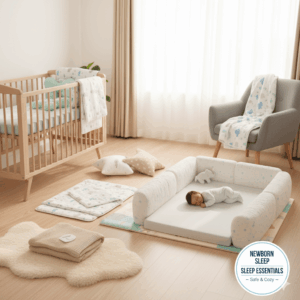
1. Swaddle

| Necessity | It helps the newborn feel secure by mimicking the snug environment of the mother’s womb. It prevents the Moro reflex (startle reflex) – unconscious flinging of limbs – which can wake the baby, thus promoting deeper sleep. |
| Considerations | Material: Choose soft, breathable, and absorbent materials like pure cotton or a stretchy fabric to prevent the baby from feeling too constricted or overheating. Types: Traditional square fabric swaddles or modern zip-up/Velcro-closure ‘Swaddle Up’ style wraps for convenience. |
| Other Notes | Duration: Generally recommended until 3 months old. Caution: To prevent hip dysplasia, the baby’s legs should be wrapped loosely in an ‘M’ shape to allow free movement. Discontinue use immediately when the baby starts rolling over due to the risk of suffocation. |
| Mandatory | Mandatory |
2. Receiving Blanket / Outer Swaddle

| Necessity | Used to wrap the baby when leaving the hospital or birthing center, or during outings, to maintain body temperature and provide protection from the external environment. It also offers stability when holding the baby. |
| Considerations | Warmth: Select a material with appropriate thickness and warmth for the season (thick cotton, fleece, etc.). Convenience: Choose a design that is easy to secure and unwrap the baby, often with straps or Velcro. |
| Other Notes | Indoors, a thinner blanket (Item 7) can often substitute for a thick outer swaddle if the room temperature is adequate. |
| Mandatory | Recommended (Essential for hospital discharge/outings) |
3. Baby Crib

| Necessity | Provides a safe, separate sleeping area for the baby, which helps reduce the risk of Sudden Infant Death Syndrome (SIDS). It prevents accidental overlaying by parents when co-sleeping and reduces back strain during nighttime feeding. |
| Considerations | Safety: Ensure the crib meets safety standards regarding rail spacing (50–95mm recommended) and the gap between the mattress and sides (20mm or less recommended). Mattress: Choose a firm and flat mattress to support the baby’s spinal development. Features: Consider adjustable height and mobility (wheels). |
| Other Notes | Never place soft pillows, thick blankets, or stuffed toys in the crib (increased SIDS risk). Mandatory for both natural and C-section births to ensure a safe sleep environment. |
| Mandatory | Mandatory (For a safe sleeping environment) |
4. Cot Sheet / Bedding Set
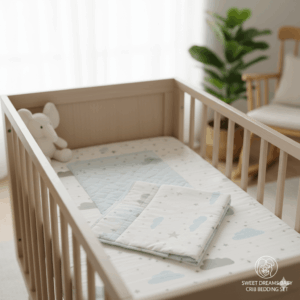
| Necessity | A fitted sheet for the crib mattress and a blanket/covering for temperature regulation. |
| Considerations | Sheet: Use a fitted sheet that secures tightly around the mattress. A sheet with a waterproof layer or a separate waterproof pad underneath is convenient for spills and leaks. Blanket: Choose a lightweight and highly breathable cotton or muslin material. Avoid heavy blankets due to the risk of suffocation. |
| Other Notes | Newborns are safer using a swaddle or a sleep sack for warmth rather than an actual blanket. |
| Mandatory | Mandatory (Sheet and lightweight cover) |
5. Baby Pillow
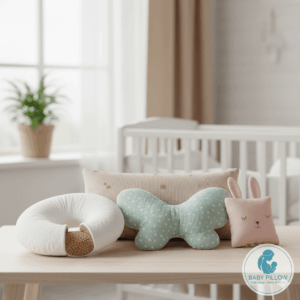
| Necessity | Newborns do not need a pillow, as soft pillows increase the risk of SIDS and suffocation. Pillows are selectively used later for purposes like heat rash management or head shape correction. |
| Considerations | Newborn: Avoid use entirely for safest sleep. Older Baby: If used after 3 months for specific reasons, choose an extremely firm and thin pillow designed for babies (e.g., flat, highly breathable pillow). |
| Other Notes | Never use soft pillows. The safest practice is to put the baby to sleep in the crib without any pillow. |
| Mandatory | Optional (Avoid use for newborns) |
6. Waterproof Sheet
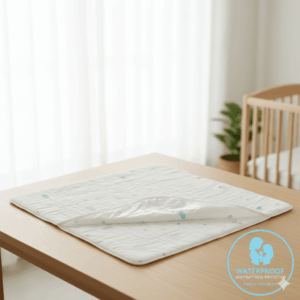
| Necessity | Protects the mattress or main cot sheet from contamination caused by spit-up, diaper leaks, or when leaving the baby diaper-free for a short time to treat diaper rash, thus reducing laundry load. |
| Considerations | Waterproofing and Absorbency: Must be fully waterproof with a decent level of absorbency. Material: The surface touching the baby’s skin should be soft cotton or bamboo, with a waterproof layer underneath. |
| Other Notes | Allows for quick clean-up by just removing and washing the pad when leaks occur. |
| Mandatory | Mandatory |
7. Blanket
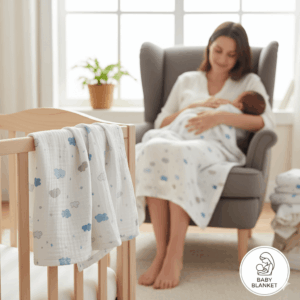
| Necessity | A versatile cover used indoors for light warmth or outdoors in the stroller for temperature control. |
| Considerations | Season and Use: Prepare different materials (muslin, cotton, fleece) and thicknesses based on the season. Muslin or thin cotton blankets are great for indoor use or as a light swaddle substitute. Size: Choose a generous size that can fully wrap the baby. |
| Other Notes | Be careful not to cover the baby’s face. If placing it in the crib, tuck the ends under the mattress so the blanket reaches only up to the baby’s chest. |
| Mandatory | Recommended (For versatility) |
8. Neck Pillow
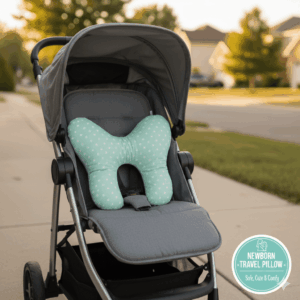
| Necessity | Used to securely support the head and neck and prevent shaking when the baby is in a car seat or stroller, especially before they can hold their head up. |
| Considerations | Fit and Support: Must fit snugly around the baby’s neck without being too thick, preventing the head from being pushed forward. Breathability: Check for breathable material, as car seats can get warm. |
| Other Notes | Never use for sleep in the crib. Only for short periods during travel or in a car seat/stroller. |
| Mandatory | Optional (Recommended for car seat/stroller use) |
9. Bumper Bed
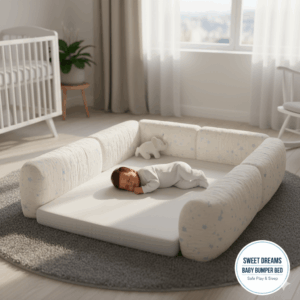
| Necessity | Provides a safe area for babies to sleep and play without the risk of falling, especially when they start rolling over or crawling. The raised bumpers protect the baby and can also be used as a playpen. |
| Considerations | Safety Guard: Ensure the guard rails are sturdy and won’t collapse when the baby leans on them. Size: Consider a large or extra-large size if parents plan to lie next to the baby, which also helps reduce back strain during care. |
| Other Notes | Newborn Stage: The high guards might cause back strain for parents when lifting the baby in and out frequently. |
| Mandatory | Optional (Recommended once the baby starts rolling over) |
10. Play Mat
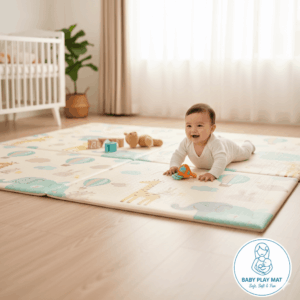
| Necessity | As the baby grows and begins to roll, crawl, and eventually walk, it provides a safe play area by absorbing impact. It also helps to reduce noise transmission (impact sound reduction). |
| Considerations | Thickness and Impact Absorption: Choose a sufficiently thick, high-density mat with excellent shock absorption. Safety: Verify it is made from non-toxic, eco-friendly materials and has anti-slip treatment. Cleaning: Check for a waterproof surface that is easy to wipe clean. |
| Other Notes | Not necessary for newborns, but becomes essential when the baby starts rolling over, typically around 3–4 months old. |
| Mandatory | Mandatory (For baby safety and noise reduction) |
Preparing safe bedding essentials enhances both your baby’s development and the quality of the parents’ rest.
Please keep the newborn safety guidelines in mind and create the most suitable environment for your little one!