To all expectant parents, if you’ve checked the Mother’s Essentials and Feeding Essentials, this guide will provide a list of Hygiene Essentials that are crucial for maintaining your baby’s cleanliness and health.
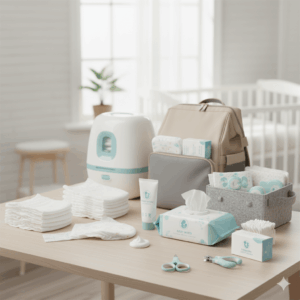
Please review these items carefully to protect your baby’s delicate skin and ensure proper health management!
ON THIS PAGE
1. Gauze Handkerchiefs

| Necessity | The most versatile and essential item, used to wipe away the baby’s drool, spit-up (milk/formula), sweat, and as a substitute for a bib during feeding. |
| Considerations | Material: Choose 100% pure cotton or bamboo material known for good absorbency and antibacterial properties, to minimize skin irritation. Quantity: Newborns use these dozens of times a day; prepare 30–40 pieces or more, considering washing cycles. |
| Other Notes | Must be washed and dried before the baby’s arrival. New items may contain impurities from the manufacturing process. |
| Mandatory | Mandatory |
2. Cloth Diapers
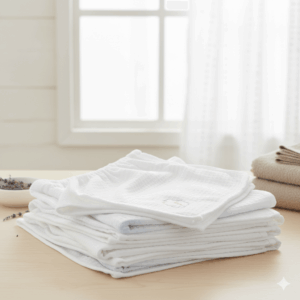
| Necessity | An economical and eco-friendly alternative to disposable diapers. Also used temporarily for babies with severe diaper rash to enhance airflow. |
| Considerations | Absorbency and Drying: Check for materials (like gauze or towel fabric) that are highly absorbent and dry quickly after washing. Quantity: If planning to use them as the primary diaper, you will need 30 pieces or more to manage washing frequency. |
| Other Notes | Early Stages: Due to the high frequency of a newborn’s urination and bowel movements, the washing load is heavy. Many parents use them in conjunction with or predominantly use disposable diapers initially. |
| Mandatory | Optional |
3. Diapers (Disposable)
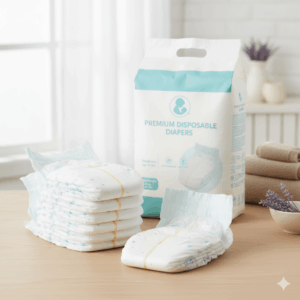
| Necessity | Essential for managing a newborn’s urine and stool. They are convenient and have high absorbency, which helps prevent diaper rash. |
| Considerations | Sizing: Do not overbuy the Newborn (NB) size. Babies outgrow them quickly, so purchase only one or two packs and be ready to move to the next size (Small). Absorbency and Breathability: Choose products that rapidly absorb urine and are highly breathable to minimize skin irritation. |
| Other Notes | Leak Prevention: Ensure the diaper size fits well around the baby’s thighs and waist to prevent leakage. |
| Mandatory | Mandatory |
4. Diaper Rash Cream/Ointment
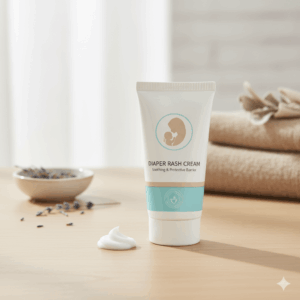
| Necessity | Forms a protective barrier on the baby’s delicate skin, irritated by urine and moisture, helping to prevent diaper rash and soothe existing rashes. |
| Considerations | Ingredients: Products containing Zinc Oxide are effective in creating a protective layer. Spreadability: Choose a cream that spreads and absorbs easily, as it must be applied frequently. |
| Other Notes | If the rash is severe, consult a pediatrician before applying any over-the-counter medicated ointment. |
| Mandatory | Recommended (For regular preventative use) |
5. Diaper Pail
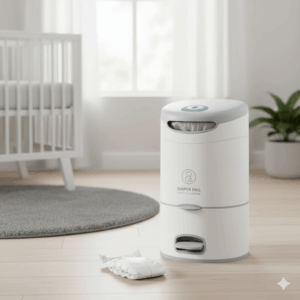
| Necessity | Needed for hygienically disposing of used diapers and effectively blocking odor. |
| Considerations | Airtight Seal: Dedicated diaper pails with strong sealing and odor-blocking features (double lock, specialized liners) are convenient. Capacity: Choose an appropriate size considering the daily volume of diapers. |
| Other Notes | While a regular trash can can be used, odor management might be challenging. Dedicated refill liners add to the ongoing cost. |
| Mandatory | Optional (Strongly Recommended based on odor sensitivity) |
6. Diaper Bag
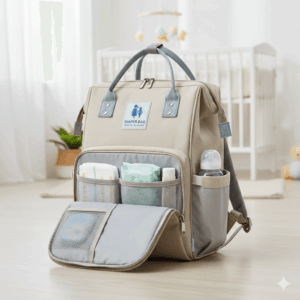
| Necessity | Essential for systematically storing and conveniently carrying necessary items like diapers, wipes, spare clothes, and feeding supplies when out with the baby. |
| Considerations | Storage Space: Check for ample space and good organization with internal pockets, including waterproof ones. Lightweight and Portability: Since the contents will be heavy, choose a lightweight material and a comfortable carrying style (backpack, tote, etc.). |
| Other Notes | Check if it has clips or straps to easily attach to a stroller. |
| Mandatory | Mandatory (For outings) |
7. Diaper Organizer
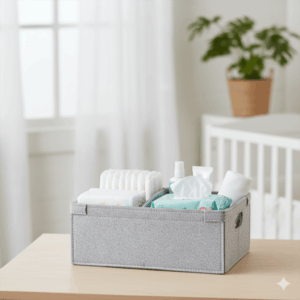
| Necessity | Collects frequently used baby items (diapers, wipes, rash cream) in one place for neat organization and easy access during diaper changes. |
| Considerations | Accessibility: Choose a structure and height that allows easy access when placed near the changing table or crib. Safety: Ensure the material is safe and free of sharp edges, preventing the baby from knocking it over or getting injured. |
| Other Notes | Can be utilized in various forms (basket, drawer) and reused later for toy storage. |
| Mandatory | Recommended (For organizing and increasing efficiency) |
8. Baby Wipes
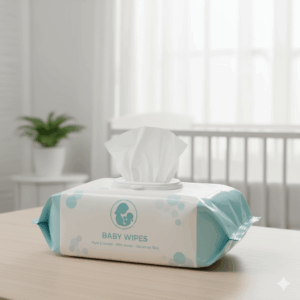
| Necessity | Used for cleaning up after diaper changes and wiping the baby’s hands, mouth, and body. Particularly convenient for outings. |
| Considerations | Ingredients: Choose products with minimal or no fragrance, alcohol, or harsh chemicals. Moisture and Fabric: Check for appropriate moisture content and soft fabric to reduce skin irritation. |
| Other Notes | Initial Stage (within 1 month): Using water-soaked gauze handkerchiefs or cotton pads may be safer for the newborn’s skin than wipes. |
| Mandatory | Mandatory |
9. Newborn Cotton Swabs
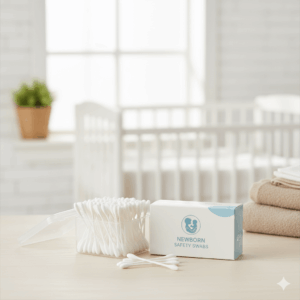
| Necessity | Used for umbilical cord care (disinfection) and removing eye boogers or secretions from narrow areas like nostrils and the outer ear. |
| Considerations | Thickness: Choose newborn-specific swabs, which are much thinner than standard ones, for delicate use. Hygiene: Use sterilized products; apply antiseptic solution for cord care. |
| Other Notes | Be careful not to insert them too deeply into the ear canal. The umbilical cord usually detaches within two weeks after birth. |
| Mandatory | Mandatory (Useful even after cord care is complete) |
10. Nail Scissors/Clippers
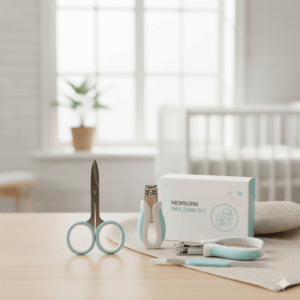
| Necessity | A newborn’s nails are thin, grow quickly, and are sharp, requiring regular trimming to prevent the baby from scratching their face and causing injury. |
| Considerations | Safety: Newborn-specific scissors with rounded tips are generally preferred. Clippers are recommended for when the baby is a bit older. Convenience: Choose a design that is easy to use, especially when trimming while the baby is asleep. |
| Other Notes | Putting mittens on the baby before trimming can help prevent accidental injury. |
| Mandatory | Mandatory |
11. Nasal Aspirator
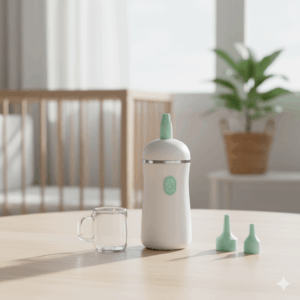
| Necessity | Newborns breathe primarily through their noses. If they have excessive mucus or a stuffy nose, it can interfere with feeding or sleep, so an aspirator is used to clear the nasal passages. |
| Considerations | Aspiration Method: Choose a convenient method: Manual (mouth suction), Electric, or Bulb/Syringe style. Ease of Cleaning: Check if the parts are easy to disassemble for cleaning and hygienic maintenance. |
| Other Notes | Avoid using too often or too forcefully, as it can damage the nasal lining. |
| Mandatory | Recommended (Useful when cold/congestion occurs) |
12. Thermometer
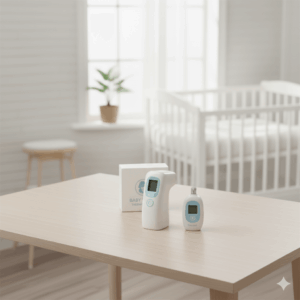
| Necessity | Essential for accurately and quickly measuring the baby’s temperature, as their thermoregulation is immature, and fever is an important sign of illness. |
| Considerations | Accuracy and Speed: Ear thermometers or non-contact thermometers known for high accuracy and speed are commonly used. (Rectal temperature is the most accurate for newborns, but ear thermometers are often preferred for quick checks.) Reliability: Check for official medical device certification. |
| Other Notes | The thermometer is essential not only when the baby is sick but also after vaccinations. |
| Mandatory | Mandatory |
13. Thermo-Hygrometer
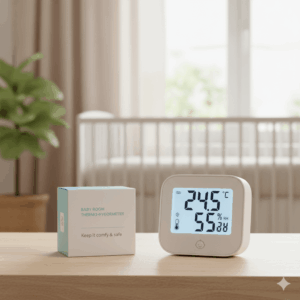
| Necessity | Needed to monitor and maintain the appropriate temperature and humidity in the baby’s living environment, aiding in thermoregulation and preventing dry skin or respiratory issues. |
| Considerations | Accuracy: Ensure the temperature and humidity readings are reliable. Readability: Products with large, clear displays are better for easy checking, especially at night. |
| Other Notes | Aim to maintain an optimal temperature of 20–24°C (68–75°F) and humidity of 40–60%. |
| Mandatory | Mandatory |
14. Baby Laundry Detergent
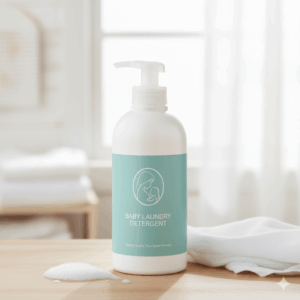
| Necessity | Baby clothes require frequent washing and come into direct contact with the baby’s skin. Using a dedicated detergent with safe ingredients helps prevent skin troubles. |
| Considerations | Ingredients: Choose products that exclude harmful chemicals like fluorescent brightening agents and phosphates, opting for safe, plant-derived surfactant-based ingredients. Cleaning Power: Ensure it can effectively remove stains from breast milk, formula, urine, and stool. |
| Other Notes | Before Birth: Needed in advance for the “newborn laundry” preparation. |
| Mandatory | Mandatory |
15. Baby Fabric Softener
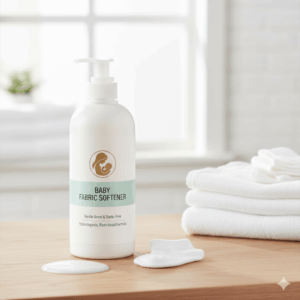
| Necessity | Used to soften baby clothes, reducing skin irritation, preventing static, and adding a mild scent. |
| Considerations | Ingredients: Avoid products containing harsh chemicals like quaternary ammonium compounds (Quats) or strong artificial fragrances that can cause skin irritation. Fragrance-Free/Hypoallergenic: For babies with sensitive skin, select fragrance-free or ultra-hypoallergenic products. |
| Other Notes | For extremely sensitive babies, rinsing thoroughly with only detergent might be safer than using fabric softener. |
| Mandatory | Recommended (For neutralizing detergent residue and softening fabric) |
Baby hygiene management is directly related to your baby’s health.
With careful preparation, you can create a clean and healthy environment for your baby to thrive.