To all expectant parents, following the Mother’s Essentials, this guide focuses on the Feeding Essentials List and selection tips vital for your baby’s healthy growth.
Whether you plan to breastfeed, formula feed, or mix-feed, check out these must-have items!
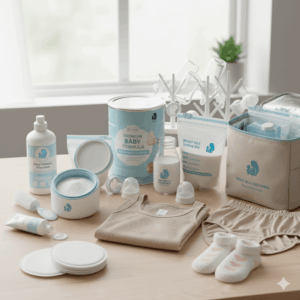
1. Formula Milk
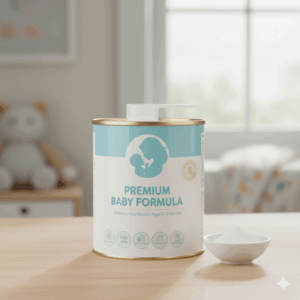
| Necessity | Provides essential nutrients if breastfeeding is difficult. Even if breastfeeding, it’s advisable to have a small amount on hand for emergencies or for mixed feeding. |
| Considerations | Stage: Select the correct stage based on the baby’s age (usually Stage 1 for 0–6 months). Ingredients: Special formulas may be considered depending on the baby’s digestion or allergies. Trial Size: Babies can be particular about formula, so buy a small amount first to check for any adverse reactions before stocking up. |
| Other Notes | Check which formula brand the hospital or postpartum center uses, as babies adapt more easily to a familiar type. |
| Mandatory | If planning to breastfeed: Optional (Small amount for emergencies) / If planning to formula or mixed feed: Mandatory |
2. Baby Bottles
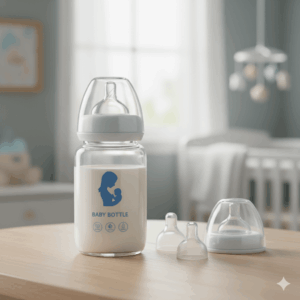
| Necessity | Used to feed formula or expressed breast milk to the baby. |
| Considerations | Material: PPSU is lightweight, durable, and highly resistant to boiling, making it a popular choice. Glass is hygienic and free of hormone concerns but heavy and breakable. Look for the BPA-Free mark. Quantity: For exclusive formula feeding, consider 7–10 bottles for daily feeding (7–8 times) and washing cycles. For breastfeeding, 2–3 bottles for emergencies or occasional use is sufficient. |
| Other Notes | Wide-neck bottles are generally easier to clean. Consider bottles with an air-vent system to help prevent colic. |
| Mandatory | Mandatory |
3. Bottle Nipples
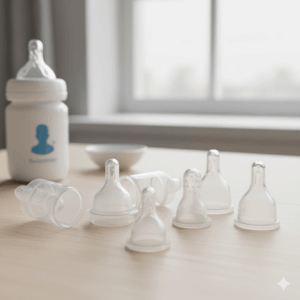
| Necessity | The key component that allows the baby to suck milk or formula from the bottle. |
| Considerations | Material: Most are made of silicone. Products resembling the texture of a mother’s nipple are better to minimize nipple confusion when mixed feeding. Flow Rate (Hole Size): Adjust the hole size according to the baby’s feeding speed and developmental stage. Choose based on whether the baby is feeding comfortably without choking or gulping, rather than strictly by age. Replacement Cycle: Replace every 2–3 months for hygiene, or immediately if discoloration, tearing, or stretching occurs. |
| Other Notes | Check for compatibility between the bottle and nipple. Use the same brand or a verified compatible third-party nipple. |
| Mandatory | Mandatory |
4. Formula Dispenser/Storage Containers
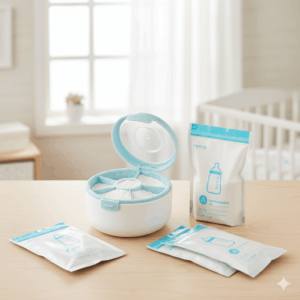
| Necessity | Needed to pre-measure and store the correct amount of formula for outings or to portion large cans of formula. |
| Considerations | Portability: For outings, multi-compartment (e.g., 3-layer) dispensers with good sealing are convenient for separate travel. Hygiene: Ensure they are easy to clean and BPA-Free. |
| Other Notes | For home storage, airtight containers are good for keeping bulk formula clean and accessible. |
| Mandatory | For Formula Feeding: Recommended |
5. Bottle Cleanser and Brush

| Necessity | Baby items like bottles, nipples, and pump parts must be cleaned thoroughly without residue to maintain hygiene and protect the baby’s health. |
| Considerations | Ingredients: Since they are used on baby items, choose a Level 1 dish detergent (safe for fruits and vegetables) or a dedicated bottle cleanser with safe ingredients. Bottle Brush: Select a brush (sponge or silicone type) that fits the bottle shape, and include a small nipple brush to clean inside the nipple. |
| Other Notes | It’s best to use a separate, dedicated cleanser for baby items rather than general kitchen dish soap. |
| Mandatory | Mandatory |
6. Bottle Drying Rack

| Necessity | Required for hygienically drying and storing cleaned bottles, nipples, and parts. |
| Considerations | Ventilation: Check that the design allows for good airflow for quick drying. Capacity: Consider the number of bottles you need to dry at once to ensure sufficient space. |
| Other Notes | If using a bottle sterilizer that includes a drying function, a separate drying rack may not be essential. |
| Mandatory | Recommended (Becomes Mandatory if a sterilizer/dryer is not used) |
7. Nursing Pillow

| Necessity | Reduces strain on the mother’s back and shoulders during feeding and supports the baby at a stable height for correct feeding posture. |
| Considerations | Height and Firmness: The height should align the baby’s head with the mother’s breast, and the pillow should maintain its shape without flattening easily. Fit: Choose a design that fits snugly around the mother’s waist for stable support. |
| Other Notes | Some pillows can also be used as a pregnancy body pillow or a support pillow for the baby to sit up later, adding practicality. |
| Mandatory | Recommended |
8. Anti-Reflux Cushion

| Necessity | Helps alleviate reflux (spitting up) or colic by keeping the baby’s upper body elevated at an appropriate angle after feeding. |
| Considerations | Angle: Check for an effective recline angle (usually around 30 degrees) for reflux prevention. Safety: Ensure the design is safe and prevents the baby from sliding down. |
| Other Notes | Use for burping and digestion immediately after feeding. It is not recommended for unsupervised or long periods of sleep. |
| Mandatory | Recommended (Especially useful for babies with severe reflux) |
9. Breast Pump
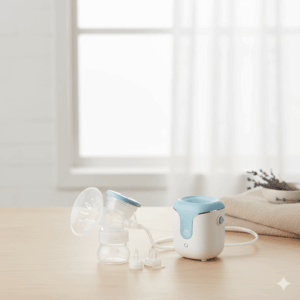
| Necessity | Needed for expressing and storing breast milk, as well as preventing and relieving engorgement. Essential if planning to pump at work or if managing a large milk supply. |
| Considerations | Type: Choose between Electric (Portable/Home) or Manual. Electric pumps offer time-saving and convenience advantages. Pressure Adjustment: Select a model that allows for detailed adjustment of suction pressure to avoid straining the breast. Renting/Buying: If unsure about the duration of use, consider renting first or using hospital/center equipment before committing to a purchase. |
| Other Notes | Mandatory for all types of birth if planning to breastfeed. It’s best to prepare it in advance as pumping usually begins shortly after childbirth. |
| Mandatory | If planning to breastfeed: Mandatory |
10. Breast Pump Flange
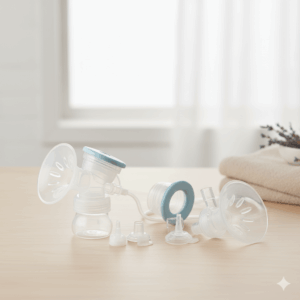
| Necessity | The part that attaches to the breast and nipple to allow the pump to effectively draw out milk. |
| Considerations | Sizing: Choosing the correct size, which is snug around the nipple, is crucial for comfortable and efficient pumping. If too large, it can cause pain, and if too small, milk may not flow properly. Measurement: Different pump brands have different sizes; check the sizing guide before purchasing. |
| Other Notes | If the flange used in the hospital or center doesn’t fit, it’s good to have access to different sizes to experiment for the best fit. |
| Mandatory | If using a breast pump: Mandatory |
11. Breast Milk Storage Bags
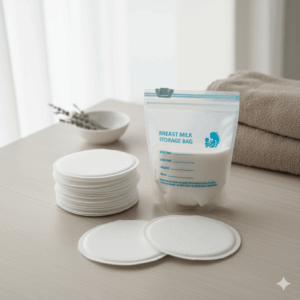
| Necessity | Used for hygienically storing expressed breast milk for refrigeration or freezing. |
| Considerations | Hygiene and Safety: Choose single-use, pre-sterilized products and confirm they are BPA-Free. Seal Strength: Look for bags with strong seals like double zippers to prevent leakage and contamination. Volume: Choose a volume (usually 120ml–200ml) that aligns with the baby’s typical feeding amount to minimize waste upon thawing. |
| Other Notes | Always label bags with the date and volume, and use the oldest milk first (First In, First Out principle). |
| Mandatory | If planning to store breast milk: Mandatory |
12. Breast Milk Cooler Bag
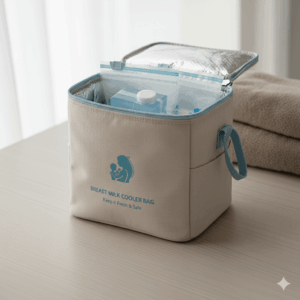
| Necessity | Used to safely maintain the freshness and temperature of expressed milk during transport or outings. |
| Considerations | Insulation Performance: Select a product with excellent thermal insulation that can maintain the milk’s freshness for an extended period with ice packs. Capacity and Portability: Choose an appropriate size based on the number of bottles/storage bags you need to carry, and check for ease of carrying. |
| Other Notes | If planning to pump and store milk after returning to work, a larger cooler bag that can accommodate both the pump and milk is recommended. |
| Mandatory | For Outings/Storage: Recommended |
Hygiene and safety are paramount for feeding items as they are in direct contact with the baby’s mouth.
I encourage you to check these items carefully for a successful feeding journey and smooth parenting start!