Hello, this is SoCooly!
When even a tiny blemish pops up on our little ones’ skin, our hearts sink, don’t they?
I vividly remember sleepless nights dealing with all sorts of skin troubles while raising my first and second children.
It’s so confusing how many types of skin conditions there are, especially those common in newborns and toddlers!
My child, in particular, suffered a lot from severe Nummular Eczema (Dongjeon Eczema). Based on that experience, I’ve packed this guide with information on Nummular Eczema and the confusion surrounding Food Allergies, which many parents encounter.
Instead of difficult, expert language, I want to offer practical help based on what I’ve experienced and heard from fellow parents—those who bathe, moisturize, and change diapers daily just like me.
Let’s get through this period together!
1. ✨ Deep Dive into 5 Common Infant/Toddler Skin Conditions
The following five are the most common skin concerns we see in our babies. (If symptoms are severe or you are unsure, it is safest to consult a pediatrician or dermatologist!)
| Condition | Typical Symptoms (Visualize the Image) | Common Areas Affected |
|---|---|---|
| Heat Rash (Miliaria) | Small, red, acne-like bumps (papules) making the skin rough and dry. | Face (cheeks, forehead), head, behind the ears |
| Atopic Dermatitis (Eczema) | Eczema accompanied by severe itching. In infancy, it often appears as acute, weeping, crusting eczema, mainly on the face and outer limbs; in childhood, it is dry, thickened eczema in skin creases (inner elbows, behind knees). | Face, scalp, trunk, skin folds (varies by age) |
| Nummular Eczema | Coin-shaped, sharply defined red patches of eczema, occurring singly or multiply. Can include severe itching, oozing, and crusting. | Arms, legs, trunk |
| Diaper Rash | Skin in the diaper area becomes red, irritated, and chafed. Severe cases may involve peeling skin or weeping. | Buttocks, perianal area, groin, lower abdomen |
| Prickly Heat (Sweat Rash) | Tiny, clear or red, pinpoint bumps or blisters. May cause itching or a stinging sensation. | Neck, armpits, groin, back, forehead (areas prone to sweating) |
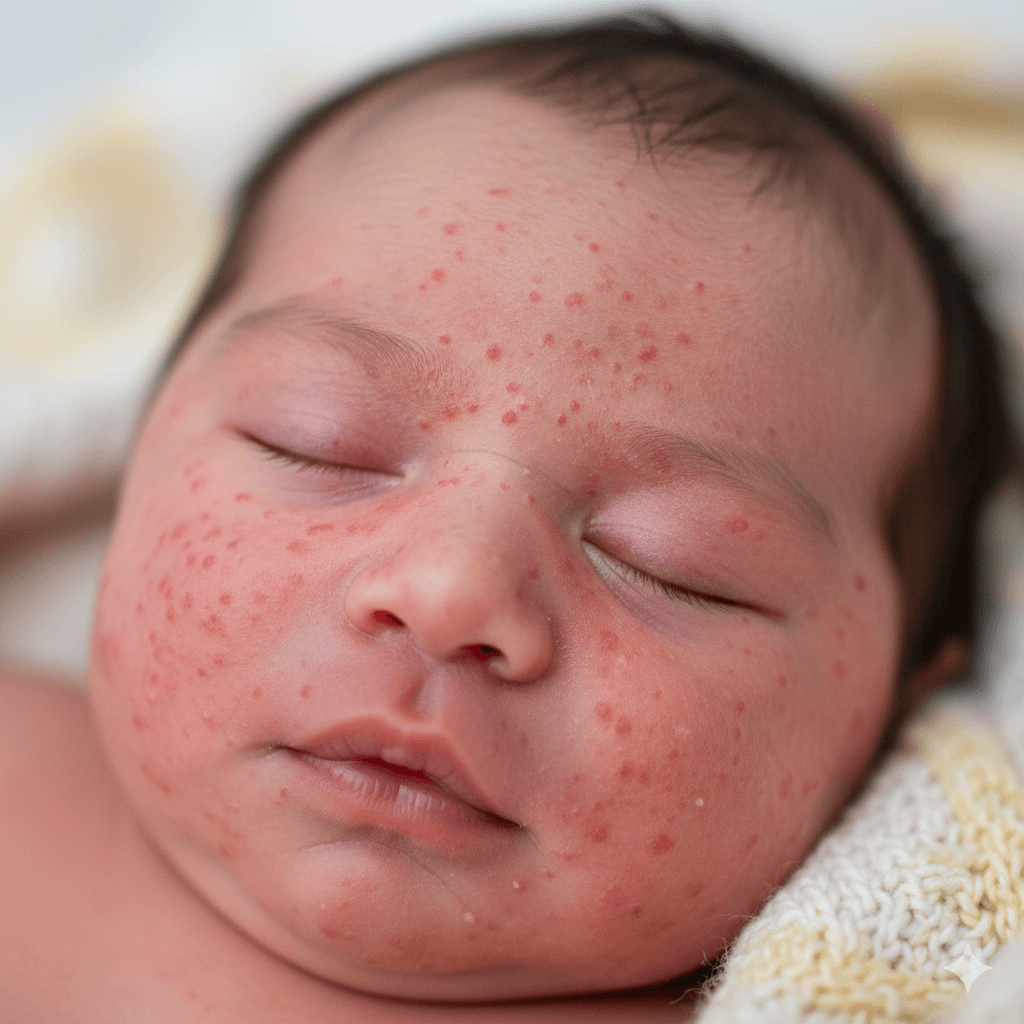
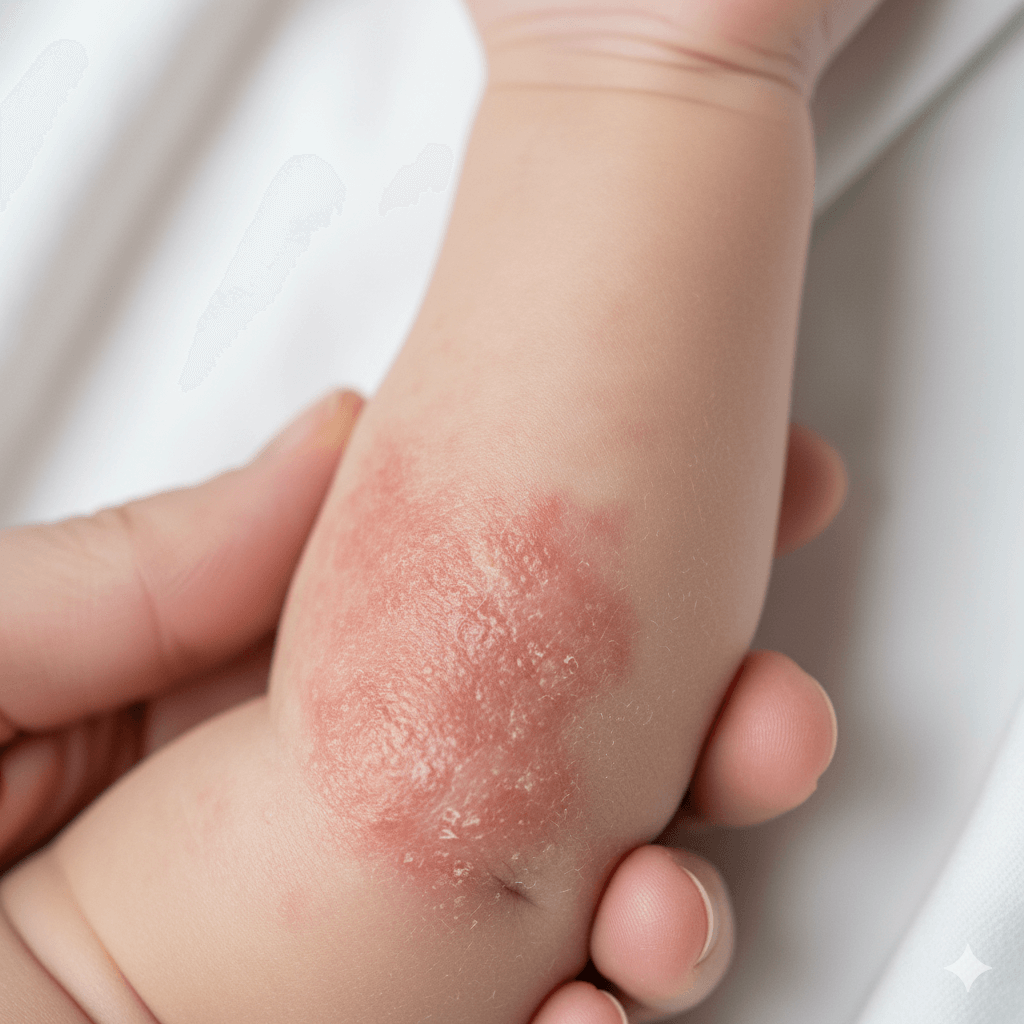
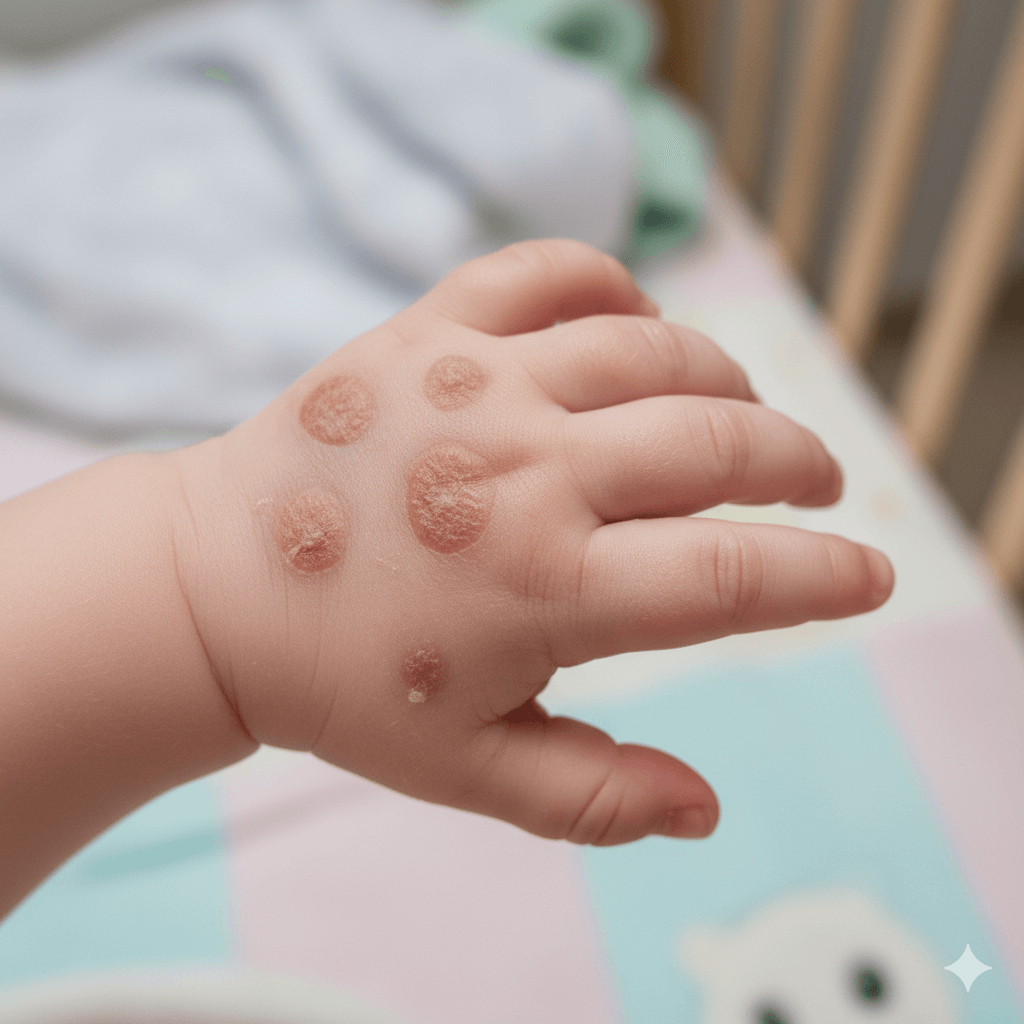
<Heat Rash(Miliaria) / Atopic Dermatitis / Nummular Eczema>
2. 🚨 How to Respond Without Panic When Your Child’s Skin Changes
Skin conditions in children often worsen if treatment is delayed. Especially Nummular Eczema, with its deeper lesions and intense itching, requires proactive management.
- Handling Nummular Eczema
- Itch Management: Apply moisturizer and cold compresses to relieve itching and prevent the child from scratching and spreading the rash.
- Essential Doctor Visit: Nummular Eczema rarely heals with self-care alone and often recurs. It is crucial to get an accurate diagnosis and professional treatment, such as steroid ointments. (Following the doctor’s prescribed dosage and duration precisely is more helpful in preventing chronicity than having an unwarranted fear of steroids.)
- Thorough Moisturizing: Apply a rich, oil-based cream generously, even around the lesion, to restore the skin barrier.
- Managing Other Conditions (Heat Rash, Atopic Dermatitis, Diaper Rash, Prickly Heat)
- Heat Rash: Manage by controlling the environment: Keep it cool (22-24°C) and moist (frequent moisturizing).
- Atopic Dermatitis: Shower briefly with lukewarm water, then moisturize generously within the 3-minute golden window, and keep nails short to prevent scratching.
- Diaper Rash: Change diapers very frequently, clean with water and allow the area to air dry completely before applying a barrier cream.
- Prickly Heat: Wash immediately with water after sweating, and dress the child in loose, cool clothing.
3. 🥛 Food Allergy vs. Skin Condition: How to Tell the Difference?
When a skin rash appears, many parents worry, “Could this be because of something they ate?” Indeed, food allergies often manifest as skin symptoms (hives, worsening of eczema).
| Distinguishing Factor | General Skin Conditions (Heat Rash, Eczema) | Skin Symptoms from Food Allergy (Hives/Urticaria) |
|---|---|---|
| Onset Time | Often appears gradually due to environment (temp/humidity) or contact irritation. | Often appears rapidly within 2 hours of consuming a specific food. |
| Symptom Pattern | Red patches, dryness, eczema, tiny bumps. Tends to have a chronic course. | Hives/Urticaria (swollen, like mosquito bites), spreading rapidly all over the body. |
| Associated Symptoms | Mainly skin symptoms. | Can be accompanied by gastrointestinal symptoms (vomiting, diarrhea, abdominal pain) or respiratory symptoms (runny nose, sneezing, difficulty breathing). |
| Course After Action | Slowly improves with management (moisturizing, environment control). | May improve quickly with removal of the allergenic food and treatment (antihistamines). |
💡 Parent Tip: What to Do if You Suspect an Allergy
- If symptoms like widespread hives, swelling of the lips/eyes, or vomiting occur within 1–2 hours after introducing a new food, stop the intake immediately and visit the hospital.
- During the early stages of weaning, it’s best to introduce common allergenic foods (eggs, milk, wheat, soy, etc.) one at a time, in small amounts, observe for any reaction, and then combine them with other ingredients.

4. 🛡️ Essential Habits for Preventing Skin Conditions
Prevention is key! Here are simple, daily habits that are not difficult to implement. My fellow parents and I agree that “If you do these well, you’ll suffer less!”
- 🧴 Moisturize Like a Habit! (3-Minute Golden Window): Apply moisturizer multiple times a day (whenever you change a diaper or clothes). Applying it within 3 minutes after bathing is critical to lock in moisture and prevent water loss.
- 🌡️ Control Indoor Temp/Humidity!: Aim to maintain the ideal temperature (22–24°C) and humidity (40–60%). Hot or dry environments aggravate all skin conditions. What feels slightly cool to adults might be just right for a baby.
- 👚 Clothes and Bedding: 100% Cotton!: Everything that touches the skin should be low-irritant. Dress your child in pure cotton and avoid harsh fabrics (wool, nylon). Ensure no detergent residue is left after washing; minimize or use gentle baby-safe fabric softener.
- 🧼 Keep Clean, But Avoid Excessive Soap!: Frequent bathing and soap use can damage the skin’s natural protective barrier. Wash lightly with lukewarm water daily to remove sweat and dust. Use a mild, slightly acidic baby soap only 1-2 times a week or for necessary areas (diaper area, etc.).
- ✂️ Keep Nails Short!: To prevent secondary infection and injury from scratching due to itching, always keep those tiny nails trimmed short.
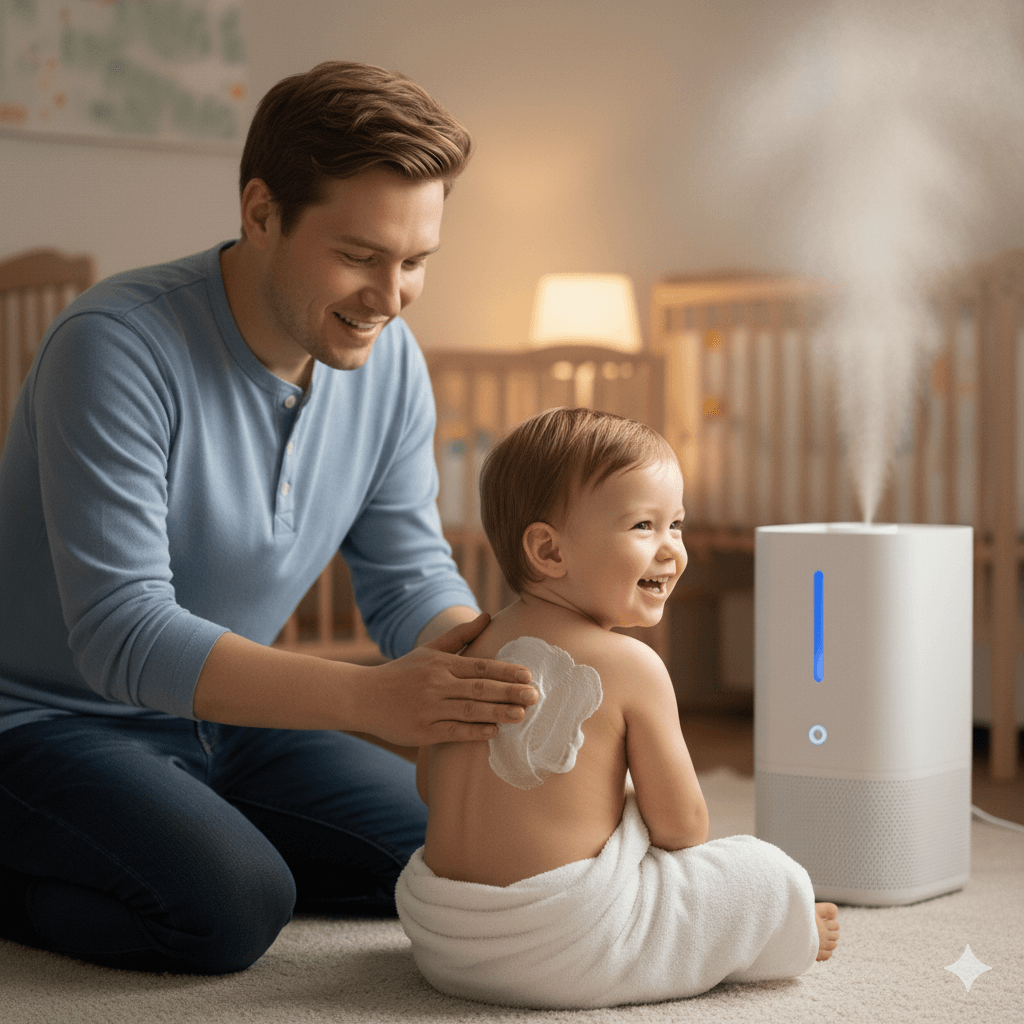



They say there are no right answers in parenting, and baby skin care is similar.
The right moisturizer, the right temperature, and the right methods may differ for your child.
Please remember that seeking accurate diagnosis and help from a specialist immediately if you are worried or symptoms worsen is the wisest action a parent can take!
Let’s keep up the great work today! 💪