Choosing the right formula and navigating bottle-feeding can feel overwhelming for new parents.
This comprehensive guide, optimized for global readers, covers everything from selecting the best formula to special feeding tips and managing common issues.
Target Keywords: Baby Formula, Formula Feeding, Formula Selection, Special Formulas, Formula Preparation, Feeding Guide

1. ✅ The 3 Essential Checks Before Choosing a Formula
Formula is your baby’s primary source of nutrition. Consider these three key points carefully when making your selection.

1-1. Match the Formula Stage to Your Baby’s Age (Crucial!)
Formulas are formulated with varying nutrient compositions and digestibility to match the baby’s developmental stage. Always select the stage that corresponds to your baby’s current age or weight.
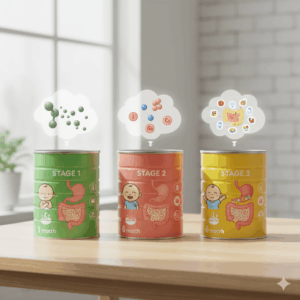
- Stage 1 (Newborn / 0–6 months): Focuses on basic nutrients required for rapid initial growth.
- Stage 2 (6 months – 1 year): Supplements nutrients, like iron and calcium, often needed as solid foods (weaning) are introduced.
- Stage 3 (1 year +): Designed for active toddlers, supporting nutritional balance alongside a varied diet.
💡 Tip: When transitioning between stages (even within the same brand), introduce the new formula gradually, mixing it with the old one over a week to allow your baby’s digestive system to adapt.
1-2. Scrutinize Key Ingredients
Beyond the basic macronutrients, check for beneficial added components:
| Key Additive Ingredient | Function |
| DHA/ARA | Fatty acids that aid in brain and visual development |
| Nucleotides | Supports immune function and gut cell growth |
| Lactoferrin | Boosts immunity and iron absorption |
| Prebiotics / Probiotics | Promotes gut health and aids regular bowel movements |
1-3. Consider Taste and Baby’s Acceptance
A highly-rated formula might not be the right fit for your baby. Observe your baby’s reaction (appetite, signs of discomfort, stool consistency) for at least 1–2 weeks before deciding if it’s a good match.
2. 🗓️ Why Does Formula Have Different Stages by Age?
“Breast milk composition doesn’t change by the month, so why are formulas staged?”
The staging is necessary because of the changes in a baby’s digestive capacity and nutritional requirements as they grow.
- Digestive Capacity: Newborns have immature digestive systems and cannot efficiently process high levels of certain proteins or minerals. As they get older, the composition and quantity of protein in the formula adjust to their improving ability to digest.
- Nutritional Needs: After 6 months, as complementary foods are introduced, babies may need more of certain nutrients like Iron and Calcium. Higher stages are fortified to cover these increasing demands.
3. 🌡️ Formula Feeding 101: The Perfect Way to Prepare a Bottle
Incorrect formula preparation can lead to nutritional imbalance or digestive issues. Follow these steps meticulously.
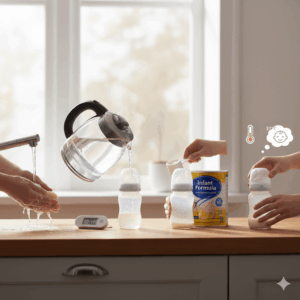
- Wash Hands: Clean your hands thoroughly with soap and water to prevent bacterial contamination.
- Prepare Water: Pour the correct amount of water that has been boiled and cooled to at least 70°C (158°F) into the sterilized bottle first. (This kills any potential bacteria in the formula powder, minimizing nutrient degradation.)
- Add Formula: Use the measuring scoop provided and level off the powder precisely. (Always check the manufacturer’s instructions for the correct water-to-powder ratio.)
- Mix: Cap the bottle and gently roll it between your palms or swirl it to dissolve the powder. Do not shake vigorously, as this creates bubbles which can lead to gas and fussiness (colic).
- Check Temperature: Cool the bottle under running water until it reaches body temperature (around 37–40°C / 98.6–104°F). Test a few drops on your inner wrist to ensure it’s comfortably warm.
⚠️ Safety Note: Prepared formula must be consumed within 1 hour at room temperature, or within 24 hours if stored immediately in the refrigerator. Throw away any leftover formula after a feed.
4. 📈 Recommended Feeding Amounts & When to Stop Formula
4-1. General Formula Amount Guide
The quantity varies by baby, but here is a typical guide:
| Age | Feeds per Day | Amount per Feed (ml/oz) | Note |
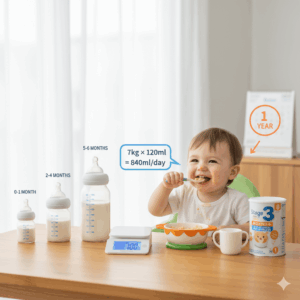
| Newborn (0–1 Month) | 8–12 feeds | 50–100 ml (2–3.5 oz) | Feed on demand. |
| 2–4 Months | 6–8 feeds | 100–200 ml (3.5–6.7 oz) | Start establishing a 3–4 hour feeding schedule. |
| 5–6 Months | 4–6 feeds | 160–220 ml (5.4–7.4 oz) | Solid foods are introduced; amount may stabilize or slightly decrease. |
💡 Calculation Guide: For babies aged 3–6 months, a general guideline for total daily intake is Weight (kg) x 120 ml. (e.g., A 7kg baby needs $\approx$ 840 ml/day).
4-2. How Long Should I Use Formula?
It is generally recommended to transition from formula to cow’s milk or toddler formula around 12 months (one year old). By this age, solid food should be the main source of nutrition, with milk serving as a supplemental source of fat, calcium, and Vitamin D.
5. 😟 Signs Your Baby’s Formula May Not Be Working
If you notice a sudden change in your baby’s behavior or digestion, the formula might be the cause.
| Main Symptom | Suspected Cause | Action Plan |
| Frequent spitting up or reflux | Digestive sensitivity, gas, or poor feeding position | Ensure adequate burping; hold baby upright for 30 minutes after feeding. |
| Severe fussiness/colic | Digestive issues, mild lactose intolerance, or milk protein sensitivity | Consult a Pediatrician about low-lactose or gentle (partially hydrolyzed) formulas. |
| Green or Mucus stools | Temporary digestive upset or viral infection | Do not change formula frequently; consult a doctor if it persists. |
| Severe constipation or diarrhea | Sensitivity to ingredients (e.g., iron) | Ensure sufficient water intake; consult a doctor about probiotics. |
| Rashes/Hives on Skin | Potential Milk Protein Allergy | Stop feeding immediately and seek urgent medical advice from a Pediatrician. |
6. 🔄 How to Safely Switch Formula Brands
When switching formulas, give your baby’s gut time to adjust. Introduce the new formula gradually over 7–10 days.
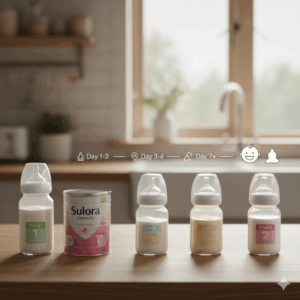
- Days 1–2: 1 feed of New Formula, rest are Old Formula
- Days 3–4: 2 feeds of New Formula, rest are Old Formula
- Days 5–6: 3 feeds of New Formula, rest are Old Formula
- Day 7 Onwards: Exclusively New Formula
Monitor Stools: If your baby develops severe diarrhea or hard stools during the transition, slow down the process and maintain the current ratio until their digestion stabilizes.
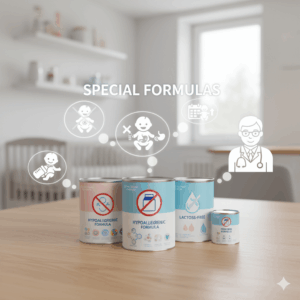
7. ✨ Special Formulas: When Standard Isn’t Enough
Special formulas are designed for babies with specific medical needs. They should only be used under the guidance of a pediatrician.
7-1. When Special Formulas are Needed
- Diagnosis of Cow’s Milk Protein Allergy (CMPA).
- Diagnosis of a metabolic disorder (e.g., Galactosemia).
- Need for Premature/Low Birth Weight formula (higher caloric density).
- Diagnosis of Lactose Intolerance (inability to digest the sugar lactose).
7-2. Main Types of Special Formulas
- Extensively Hydrolyzed Formula (EHF): The proteins are broken down into very tiny fragments, making them hypoallergenic. Used for babies diagnosed with CMPA.
- Partially Hydrolyzed Formula: Used preventatively for babies at high risk of developing allergies (often called “Gentle” or HA formulas).
- Lactose-Free Formula: Used for babies with true Lactose Intolerance.
- Premature Baby Formula: Higher in calories, protein, and minerals to support the growth of preterm or low-birth-weight infants.
8. 🚗 Formula Feeding On The Go: Essential Tips for Outings
8-1. Pre-Measure with Portable Dispensers
Measure out single-feed portions into a portable formula dispenser or small, sterilized containers. Labeling them with the feed time/number can help prevent confusion.
8-2. Carry Hot Water in a Flask
Bring a thermos of hot, boiled water (at least 70°C) for safe preparation (as per Section 3). Carry a separate bottle of cooled, sterile water to bring the feed down to drinking temperature quickly.
8-3. Utilize Ready-to-Feed (RTF) Formulas
Liquid Ready-to-Feed formula is the most convenient option for travel. It is sterile and does not require mixing with water. Simply attach a sterilized nipple/teat and feed immediately.

💖 Final Encouragement: Your Peace of Mind Matters
Formula feeding is just one aspect of parenting.
Don’t strive for unattainable perfection.
What truly matters is your well-being and the loving connection you build with your baby.
If you are struggling, please consult your healthcare provider or pediatrician to find the formula and feeding schedule that works best for your unique child.
Happy feeding!